The Heavy Toll of a Parched Earth
When the Rains Fail: The Silent Crisis of Pastoral Livelihoods
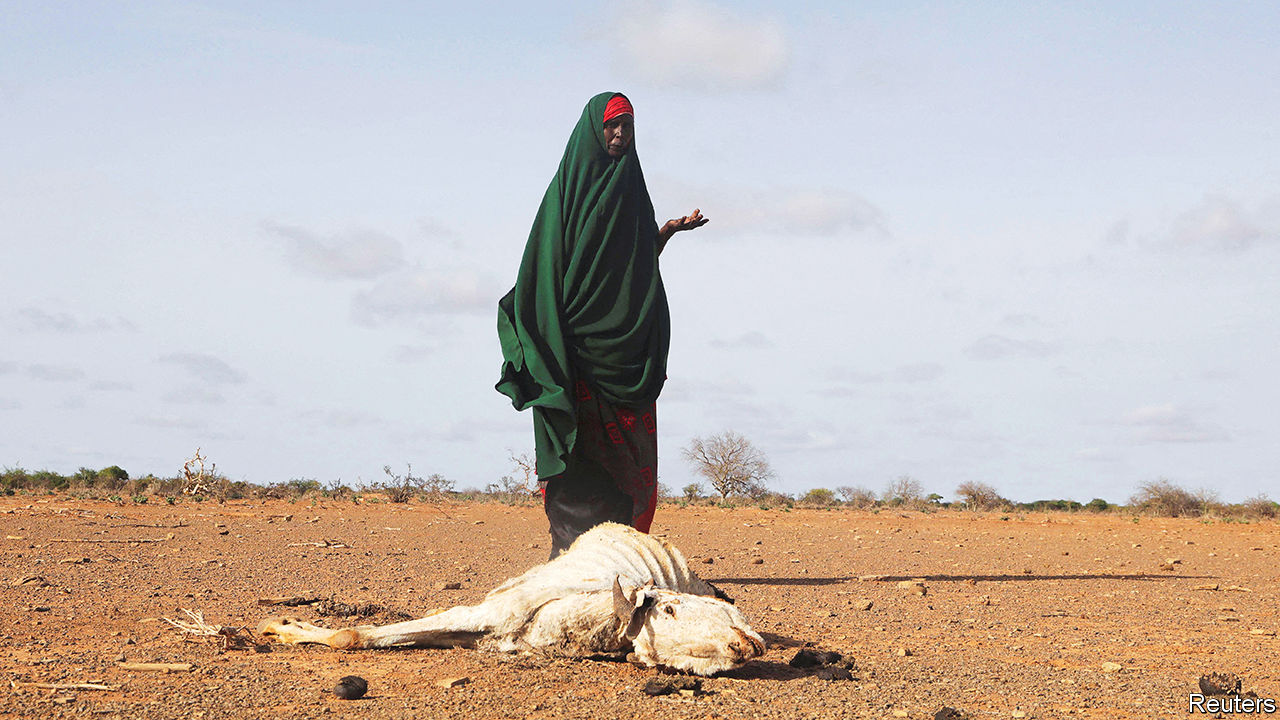
This image presents a heartbreakingly common scene in the Horn of Africa’s drought cycles. A woman, draped in a deep green shawl that contrasts sharply with the scorched brown earth, stands over the remains of an animal—likely a goat or sheep. Her gesture, with one hand slightly raised, suggests a mix of resignation and a plea for witnessing the loss. The landscape around her is flat and cracked, devoid of the grass needed to sustain herds, with only dry, skeletal trees on the horizon.
The Human Impact For "climate-affected rural populations", livestock are not just animals; they are a family's savings account, food source, and primary income. The death of a single animal represents a direct hit to household security; the death of a herd is a catastrophe. This image visualizes the "Climate Adaptation & Resilience" challenge. When water sources dry up (as seen in the previous image) and pastures fail, families slide instantly into poverty and food insecurity. The burden often falls heavily on women, who are responsible for household nutrition.
The Call for Resilience This reality drives Raad Society’s commitment to Strategic Objective 3. It emphasizes that water aid alone is not enough; communities need:
Livelihood Diversification: Reducing reliance on rain-fed livestock so families have other income sources during dry spells.
Emergency Intervention: Immediate "Cash-based Assistance" (from your website data) to help families buy food when their herds die.
Drought Preparedness: Early warning systems that allow herders to sell or move animals before conditions become this critical.